Signs of a possible service-line problem
- Water or unusually soft soil appears between the meter or well and the building
- Pressure drops throughout the property
- The meter shows use when known fixtures and appliances are off
- The water bill changes without an explained increase in use
- Storm damage, roots, digging, or heavy equipment affected the likely route
Confirm utility responsibility before private repair
The meter is a common dividing point, but the water provider determines the actual ownership boundary. A leak in the street, around public equipment, or on the provider side should begin with the utility.
When the provider confirms service reaches its responsibility point and the concern lies on the private property side, a licensed plumber can evaluate the service line.
Focused repair or service-line replacement
A known, accessible break may support a focused repair. Multiple leaks, repeated failures, extensive damage, or broader line-condition concerns may make partial or full replacement worth comparing.
The route length, material, depth, access, crossings, and connection points all affect the practical scope. A long rural service line requires a different plan from a short line on a compact lot.
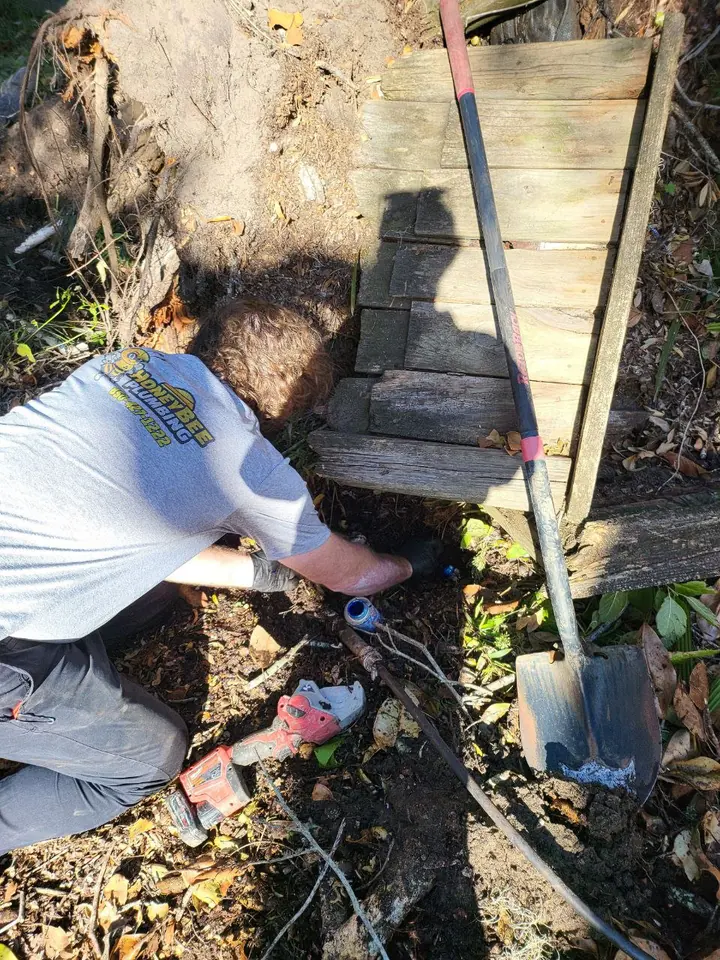
Safe access and excavation planning matter
- Call 811 before planned excavation
- Share known private utilities, irrigation, wells, and prior line routes
- Do not dig around unmarked or unknown utilities
- Keep clear of flooded meter boxes, unstable trees, and downed power lines
- Coordinate restoration and non-plumbing site work in the written scope
Local experience with long and storm-damaged lines
Properties across Santa Rosa, Escambia, and Okaloosa Counties can have long private water lines, mature trees, and routes that were never mapped for the current owner. Honey Bee Plumbing serves communities from Milton, Pace, and Navarre to Pensacola, Cantonment, Perdido Key, and Crestview with property-specific repair planning.