
Leaks and pipes · Plumbing Answers
What should you do when trees or storm debris damage a buried water line?
Start here.
Do not start cutting, lifting or digging around an unknown line. If it is safe and the shutoff is clearly yours, stop the water to limit damage. Contact the utility for a suspected main or problem on its side of the meter, and call a licensed plumber for a private service line or plumbing on the property. Keep clear of unstable trees, floodwater, gas odors and downed power lines, and call 811 before any planned excavation.
Make the area safe before tracing the leak
A buried water line can share the same damaged corridor as electric, gas, communications or septic components. Storm debris can also hide voids, sharp material and unstable limbs. Do not treat debris removal as a simple plumbing step when other utilities or hazards may be present.
If water can be shut off from a safe, clearly identified private valve, doing so may limit property damage. Do not enter a utility work zone, operate utility-owned equipment or reach into a flooded meter box.
Give the plumber a route, not a guess
- Where the meter, well or known supply point is located
- Where the line enters the home or outbuilding
- Whether pressure drops everywhere or only in one area
- Where water, soft soil or an unusual sound appears
- What changed during the storm, including fallen trees or heavy equipment traffic
- Whether the route has been marked through 811 before excavation
Donna’s line showed why access is not the whole diagnosis
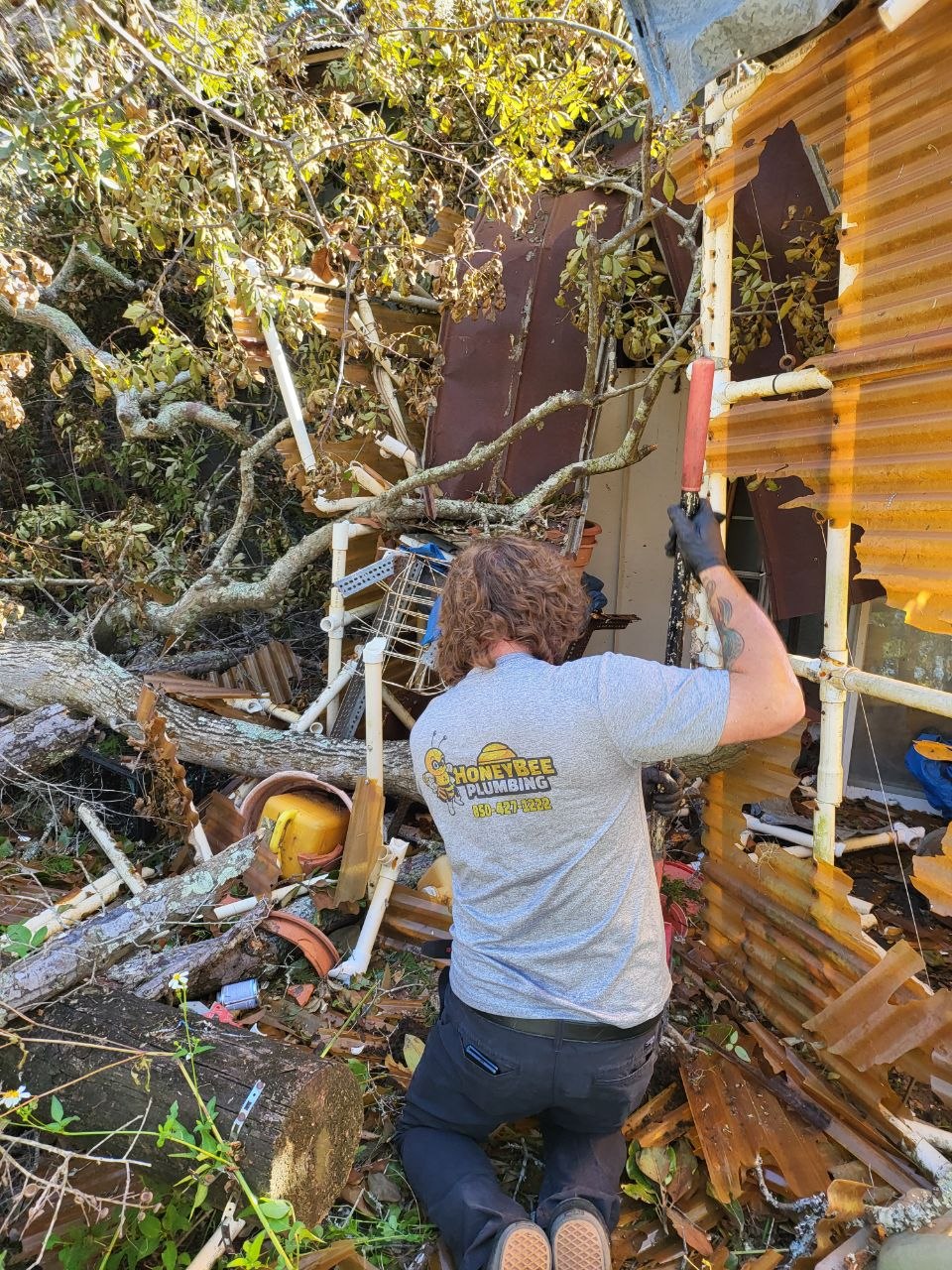
Donna had been without water for 10 days. Much of the route of her water line, estimated at about 200 yards, was buried beneath trees and debris left by Hurricane Isaias. The immediate goal was not to turn the property into a cleanup project. It was to find a practical way to restore water.
Robert turned the water on, followed the route and listened for running water. One repair did not end the search. Honey Bee found and repaired four leaks before water was restored to Donna’s home. The visit also made it possible to identify additional plumbing concerns for follow-up so the home could move toward reliable, functioning access to water.
That story is not a promise that every buried line can be found or repaired the same way. It shows why field observation, patience and a safe path to the line matter more than assuming the first wet spot is the only break.
Know whether to call the utility or a plumber
Call the water provider when the leak appears in the street, at a public main, around utility equipment or on the provider’s stated side of the meter. Call a licensed plumber when the provider confirms service reaches the meter and the damaged line is part of the private property plumbing.
Ownership boundaries vary. When the location is uncertain, start with the water provider and describe exactly what you can see without entering the hazardous area.
Plan repair access before equipment moves in
Call 811 before planned digging so participating utilities can mark underground facilities. Marking does not remove every site hazard or identify every private line, so the repair team still needs a careful access and excavation plan.
Photograph visible storm damage from a safe position, preserve any utility reference number and tell the plumber about private wells, irrigation, outbuildings and previous line routes that may not appear on public markings.
Sources behind this field guide.
Local NWS guidance warns about floodwater, downed utilities, unstable conditions and unsafe tree removal after a storm.
Open the official source Florida Division of Emergency ManagementGas utilities and safe storm cleanupFlorida emergency guidance says to keep meters visible, protect exposed utilities during cleanup and contact 811 before digging around roots or repairs.
Open the official sourceWhat matters here at home
Long service lines are common on rural and semi-rural properties in Santa Rosa, Escambia, and Okaloosa Counties. Fallen pines, root balls, washout, and cleanup equipment can affect a line far from the house, especially when the route was never mapped for the current owner.
Serving Santa Rosa, Escambia, and Okaloosa Counties.